Hello.
I am Yukiko Horiuchi, a certified administrative scrivener.
In recent years, there has been an increase in the number of South Korean artists, actors, models, and influencers holding performances, fan meetings, advertising shoots, TV appearances, and brand events in Japan.
In such cases, the status of residence that is often considered is"Entertainment Visa"It is.
Since it is relatively easy for South Korean nationals to enter Japan on short-term visas, some people wonder whether it might be possible to hold performances or film shoots during such short stays.
However, when performing for an audience in Japan, or engaging in commercial activities such as advertising, broadcasting, or commercial filming, the stay is not considered a short-term stay, but rather,Cases Where You Should Consider Applying for a Performance Visamay fall under this category.
In this article, we’ll discuss the issues that Korean artists, actors, models, and influencers are particularly likely to face when working in Japan.Entertainment Visa Type 1-Ro-4andEntertainment Visa Type 3I will focus on explaining these topics.
What is an entertainment visa?
A "Performing Arts Visa" is a status of residence considered for foreign nationals who engage in activities in Japan related to theater, variety performances, musical performances, sports, advertising, broadcasting, film production, and commercial filming.
Particularly in the field of Korean entertainment, this is often considered in the following situations:
- K-Pop Concert
- Fan Meeting
- Live Performance
- Dance Performance
- Showcase
- Brand Event
- Advertising Photo Shoot
- Filming a TV Show
- Film Production
- Commercial Photography
- Music Video Shoot
- Recording audio or video
However, even activities such as those described above do not all fall under the same type of entertainment visa.
The criteria to consider vary depending on the specific nature of the activities to be conducted in Japan, whether there will be an audience, the payment arrangements, and whether the event is for advertising or promotional purposes.
When holding events such as K-pop concerts and fan meetings in Japan
▶︎Entertainment Visa Type 1-Ro-4
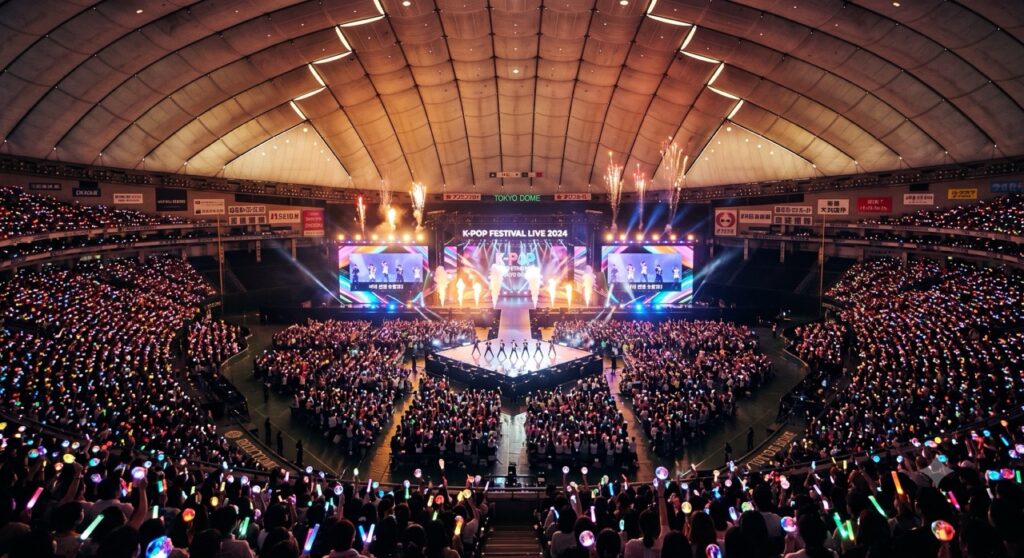
Simply put, the Type 1-Ro-4 Performance Visa is the category primarily considered when conducting stage activities in the form of performances or events for an audience in Japan.
For example, the following activities may fall under this category.
| K-Pop Concert |
| Fan Meeting |
| Showcase |
| Advertising Event |
| Live Performance |
| Dance Performance |
| DJ Performance |
| Appearing in a musical or play |
| Stage events for an audience |
In other words, when South Korean singers, idols, dancers, musicians, and others actually take the stage in Japan to perform for an audience, the first step is to determine whether they qualify under Category 1-Ro-4 of the entertainment visa.
The important thing is that it isn't judged solely on the basis that "a famous artist is coming to Japan."
The Immigration Services Agency will conduct a comprehensive review to determine where the performances will actually take place, the nature of the contractual relationship with the venue, how the performance fees will be paid, and the schedule and content of the events.
Therefore, it is important to organize the performance contract, venue information, event schedule, promotional materials, and documents regarding the performers’ activities and compensation in advance.
Advertising photography, broadcasting, film, commercial photography, audio and video recording, etc.
▶︎Entertainment Visa Type 3
Entertainment Visa Type 3 is primarily considered for activities related to advertising, filming, broadcasting, movies, commercial photography, and audio and video recording, rather than the performance itself.
For example, the following activities may fall under this category.
| Advertising Photo Shoot for a Cosmetics Brand |
| Filming Promotional Videos for Japanese Companies |
| Appearance at a Brand Launch Event |
| Filming a TV Show |
| Film Production |
| Magazine or Photo Shoot |
| Filming YouTube Content for Advertising and Promotional Purposes |
| Music Video Shoot |
| Interview on Product Promotion |
| Recording audio or video |
The Entertainment Visa (Type 3) applies to activities such as promotional activities for goods or businesses, the production of television programs or films, commercial photography, and activities involving audio or video recording on commercial media.
Therefore, if your activities in Japan will primarily consist of advertising photo shoots, promotional video production, television appearances, and brand content shoots—rather than stage performances—you should first consider applying for a Type 3 Performance Visa.
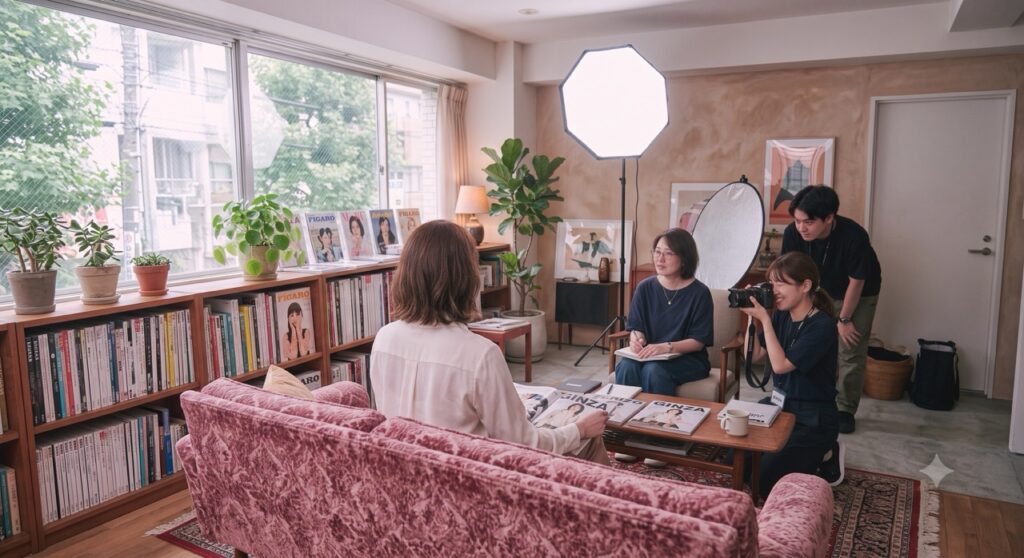
The Difference Between Entertainment Visa Type 1-Ro-4 and Entertainment Visa Type 3
Both the Entertainment Visa (Category 1-Ro-4) and the Entertainment Visa (Category 3) are statuses of residence related to entertainment activities, but the criteria for determining eligibility differ.
| classification | Entertainment Visa Type 1-Ro-4 | Entertainment Visa Type 3 |
|---|---|---|
| Basic Criteria for Decision-Making | When performing for an audience | When engaging in activities for advertising, photography, production, or promotional purposes |
| Key Activities | Concerts, fan meetings, showcases, live performances, dance performances, DJ performances | Advertising shoots, TV program shoots, film shoots, commercial photography, brand promotion, product promotion interviews |
| Focus of Activities | Stage Production | Filming, Advertising, Promotion, Production |
| Whether or Not There Is an Audience | The focus is primarily on audiences | This may apply even if there is no audience. The focus is on the production of films, advertisements, and promotional materials. |
| What's More Important Than the Event Name | Whether to actually hold a performance for an audience | Is it for advertising, photography, or production purposes? |
| Relationship to Short-Term Stays | If tickets are being sold or if you are performing in Japan, you may need to consider applying for a performance visa rather than a short-term stay visa. | Japanese companies may need to consider applying for a performance visa for advertising and promotional activities, commercial photography and video shoots, and the production of broadcasts, films, and music videos. |
| Whether Compensation Is Provided | Even if there is no compensation, consideration may be necessary depending on the nature and commercial viability of the performance. | Even if no compensation is provided, it may be necessary to consider the matter if the footage or promotional materials are used for commercial purposes. |
| To put it simply, | For performances on stage intended for an audience: Item 1(b)(4) | If your business focuses primarily on photography, advertising, promotion, and production, choose Category 3. |
In practice, the most important point is not the event name, butDetails of Our ActivitiesIt is.
For example, even if an event is called a “fan meeting,” if its actual content is similar to a photo shoot for brand promotion, it may be necessary to consider applying for a Type 3 Performance Visa.
On the other hand, even if the event is labeled an “advertising event,” if it primarily consists of stage performances in front of an audience, you may need to consider applying for a Type 1-Ro-4 Entertainment Visa.
Please note that this may not be possible for short-term stays.
Because South Korean nationals can easily enter Japan on short-term visas, it is sometimes assumed that they can participate in performances and film shoots during such short stays.
However, when performing in Japan, participating in advertising photo shoots, filming for television programs, or engaging in commercial promotional activities, it is not uncommon to require a performance visa rather than a short-term stay visa.
In particular, we recommend checking in advance whether you may need a visa in the following situations:
- Performances for Which Tickets Are Sold in Japan
- Fan meeting for Japanese fans
- Advertising Photo Shoots for Japanese Companies or Brands
- Filming for TV shows or YouTube content
- Commercial Photography or Video Production
- Showcases held at venues in Japan
- Events Involving Contracts with Japanese Companies
- When appearance fees, modeling fees, or photography fees are paid
If, after entering Japan on a short-term stay, your actual activities are determined to constitute employment or entertainment activities, this could affect your future entry into Japan and visa screening, so please exercise caution.
Not only the artist themselves, but also the accompanying staff must be verified.
When applying for a performance visa, it is necessary to consider not only the artist’s status of residence but also that of the staff members entering Japan with them.
For example, the following types of people may fall into this category.
- Manager
- Stylist
- Hair and Makeup Artist
- Director of Photography
- Interpreter
- Choreographer
- Stage Crew
- Sound and Lighting Staff
- Staff member at a South Korean talent agency
However, this does not mean that all accompanying individuals must obtain a performance visa.
The decision depends on whether you are simply accompanying someone or actually performing work on-site in Japan.
For this reason, it is important to clarify the roles of not only the artist but also everyone accompanying them in advance.
Documents to Review During Preparation
When applying for a performance visa, the required documents vary depending on the nature of your activities.
However, generally speaking, you will need to review the following materials.
- Event Overview
- Itinerary
- Performance or Filming Schedule
- Contract
- Documents Regarding Appearance Fees or Compensation
- Information regarding performance venues or filming locations
- Promotional materials, posters, ticket sales page
- Company Profile of the Japanese Hosting Organization
- Activity records from the applicant’s agency in South Korea
- Handout Explaining the Roles of Accompanying Staff
In particular, for entertainment visas, since event schedules are often already set, any delays in preparation could affect the actual date of entry.
Rather than waiting until right before the event to begin preparations, it is advisable to start exploring visa options early on, once the contractual arrangements and event details have been largely finalized.
Common Cases
1. When Korean idols hold fan meetings in Japan
If you are holding a fan meeting for Japanese fans that includes a stage greeting, a talk session, a performance, or other similar activities, you should consider applying for a Type 1-Ro-4 Entertainment Visa.
2. When a South Korean actor participates in a Japanese brand event
If the visit involves more than just stage rehearsals—such as appearances at events for brand promotion, photo calls, interviews, and advertising photo shoots—you may need to consider applying for a Type 3 Performance Visa in addition to a Type 1-Ro-4 Performance Visa.
3. When Korean models do photo shoots for magazines and advertisements in Japan
When photographs are to be used in magazines, advertisements, brand campaigns, product promotions, and similar contexts, it is standard practice to apply for a Type 3 Entertainment Visa, as this is considered commercial photography.
4. When a South Korean influencer films a promotional video for a Japanese company
If the video is being filmed to promote a Japanese company’s products or services, it may be subject to different considerations than those for mere sightseeing or personal content.
In such cases, it may be necessary to consider applying for a Type 3 Entertainment Visa.
summary
In this article, we explained the differences between the Entertainment Visa Type 1-Ro-4 and the Entertainment Visa Type 3, which are often considered by Korean artists, actors, models, and influencers when working in Japan.
In recent years, visits to Japan and activities in the country by Korean entertainers—including K-pop artists, actors, models, and influencers—have become even more frequent.
If you are planning performances, fan meetings, advertising shoots, or brand events in Japan, it is important to check visa requirements in advance and make the necessary preparations to ensure that the events run smoothly.
Horiuchi Administrative Scrivener Office has extensive experience in handling entertainment visa applications, and, ,We provide accurate and prompt service.
If you have any questions regarding performances in Japan, advertising photo shoots, brand events, or TV program filming, please feel free to contact us.
Inquiry / Access

Horiuchi Gyoseishoshi Lawyer Office (Shinjuku, Tokyo)
Attn: Gyoseishoshi Scrivener Yukiko Horiuchi
Affiliation: Tokyo Gyoseishoshi Lawyers Association, Shinjuku Branch
Tokyo Immigration and Residency Management Bureau, Application Agency Gyoseishoshi Scrivener
Member of Foreign Employment Support Organization (FESO)
▶ See our office introduction page
- Access:
- 1 minute walk from Higashi-Shinjuku Station on Tokyo Metro Fukutoshin Line
- 1 minute walk from Higashi-Shinjuku Station on the Toei Oedo Line
- 10 min. walk from Shin-Okubo Station on JR Yamanote Line
- 15 min. walk from Shinjuku Station on JR Yamanote Line
- 15 minutes walk from Okubo Station on JR Chuo Sobu Line
- 10 minutes walk from Seibu Shinjuku Station on Seibu Shinjuku Line
堀内行政書士事務所-300x189.png)